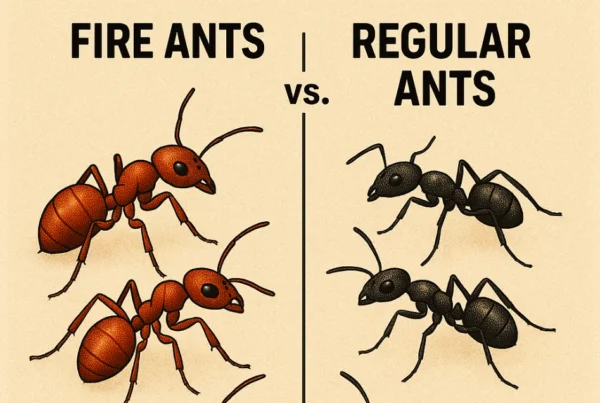

Ants are one of the most common household pests, often showing up in kitchens, bathrooms, and backyards seemingly out of nowhere. But they don’t appear by accident. Ants are highly motivated by food, moisture, and shelter. If your home offers even one of those, you could be unintentionally inviting them in.
Below, we break down what attracts ants, how to prevent them, and when it’s time to call a professional ant control service.

Why Ants Invade Homes
- Food Sources
- Crumbs on counters or floors.
- Open pet food dishes.
- Grease or sugar spills.
- Unsealed pantry items.
- Water & Moisture
- Leaky pipes or faucets.
- Damp wood under sinks.
- Standing water in plant trays or bathtubs.
- Entry Points
- Cracks in foundation.
- Gaps around windows and doors.
- Utility line penetrations.
Common Ant Species & What They Want
| Ant Type | Attraction | Risk Level |
| Carpenter Ants | Damp or decaying wood | Can damage wood structures |
| Odorous House Ants | Sweet foods and moisture | Strong odor when crushed |
| Pavement Ants | Grease and crumbs | Nest under sidewalks or slabs |
| Fire Ants | Protein and sugary foods | Painful stings and aggressive |
| Pharaoh Ants | Sweets, proteins, grease | Spread quickly in buildings |
Ant Control Tips to Stop Ants From Invading Your Home
- Seal Off Entry Points
- Caulk cracks around doors, windows, and walls.
- Install door sweeps.
- Repair screens and weather stripping.
- Maintain a Clean Environment
- Wipe down kitchen surfaces regularly.
- Store food in airtight containers.
- Clean up spills immediately.
- Eliminate Moisture.
- Fix leaks promptly.
- Use dehumidifiers in damp areas.
- Don’t leave wet towels or clothes lying around.
- Manage Outdoor Attractants
- Trim shrubs away from the house.
- Store firewood away from exterior walls.
- Keep trash bins tightly sealed.
DIY Methods vs. Professional Ant Control
| DIY Methods | Professional Ant Control |
| Store-bought ant bait stations | Identifies nesting sites and species accurately |
| Vinegar and water spray | Uses targeted treatments |
| Cinnamon or diatomaceous earth barriers | Prevents future infestations |
| Limitations: Temporary relief, less effective for large or hidden infestations, may not address root colonies. | Highly effective, addresses root cause issues. |
If ants keep coming back, it might be time for professional ant control.
When to Call a Professional Ant Control Expert
- Repeated ant sightings despite cleaning and baiting.
- Ants appearing in multiple rooms.
- Discovery of wood damage (possible carpenter ants).
- Allergic reactions to bites or stings.
Final Thoughts
Ants may be small, but they can become a big problem if left unchecked. Understanding what attracts them and how to block their path is the first step. While DIY methods can offer temporary relief, professional pest control is the most effective way to eliminate ants for good.
FAQs
Can ants live inside walls?
Yes, especially carpenter ants. They often nest in damp wood within walls, floors, and insulation.
Are ants active all year round?
While more common in warmer months, some species like pharaoh ants can stay active indoors year-round.
Can ants carry disease?
While not as dangerous as roaches, ants can contaminate food surfaces and spread bacteria like Salmonella.
Do ultrasonic repellents work on ants?
There is limited evidence that they are effective for ant control. Physical exclusion and baiting are more reliable.
How fast can an ant infestation grow?
Very quickly. Some colonies have thousands of ants and can reproduce rapidly if not treated early.
Recent Posts / View All Posts